First-Timer's Safari Guide for East Africa | AFCON 2027
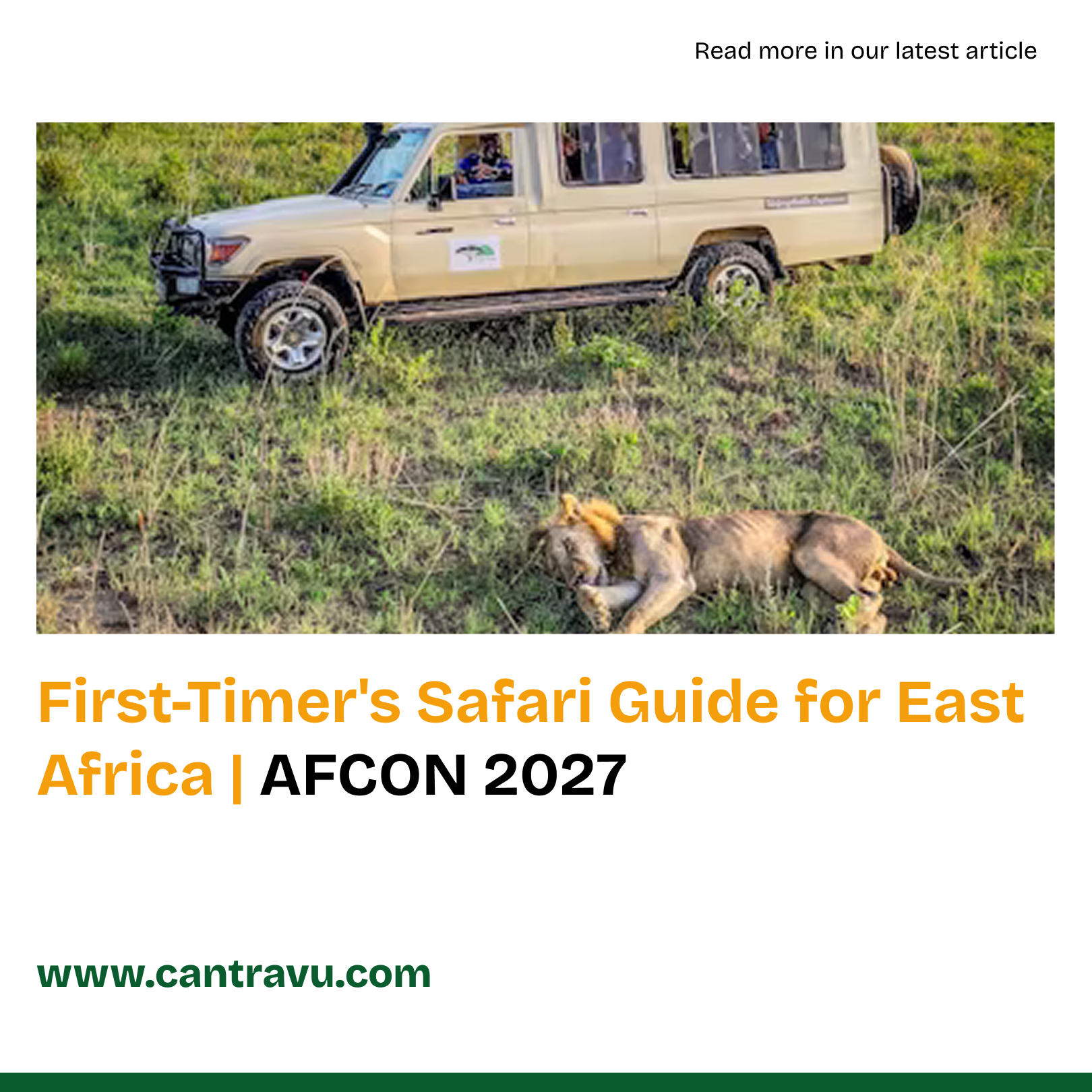
Planning your first safari in East Africa around AFCON 2027? What to expect, how to choose between Kenya, Tanzania, and Uganda, what to pack, which parks are best for first-timers, and how to book safely.
Your first safari will stay with you for the rest of your life. Here's how to approach it properly.
What a safari actually is (beyond the Instagram version)
Safari is a Swahili word meaning "journey." A game drive safari means sitting in a 4WD vehicle, usually with an open roof, driving slowly through a national park or reserve looking for wildlife.
What it isn't: a zoo visit where animals appear on schedule. Wildlife moves on its own schedule. Part of the experience is the patience — sitting still, reading the landscape, watching guides who understand animal behaviour predict what's about to happen.
The moments that define a safari — a lioness with cubs, a leopard in a tree, a herd of elephants moving through dust in the late afternoon light — cannot be manufactured. But going with a knowledgeable guide dramatically increases the chances of finding them.
Choosing the right type of safari
Budget (camping) safaris
$100–$250 per person per day. Public campsites, shared facilities, but full game drive access. The wildlife is the same regardless of what you're sleeping in. Good option for younger travellers or those prioritising cost.
Mid-range lodge safaris
$250–$500 per person per day. Comfortable lodge rooms with private bathrooms, good food, and usually two game drives per day (morning and late afternoon). The sweet spot for most first-timers.
Luxury tented camps
$500–$1,500+ per person per day. Private plunge pools, butlers, gourmet food, mobile tents that move with the migration. Not necessary for a first safari but exceptional if budget allows.
What to expect on a game drive
- Early start. Dawn game drives (leaving at 6am) produce the best sightings. Predators hunt at night and are often visible in the early morning before retreating to shade.
- Slow pace. Your guide will drive slowly, stop frequently, and scan the landscape continuously. Do the same — look for movement, unusual shapes, birds, and the behaviour of other animals.
- Patience. You might drive for 30 minutes with nothing, then see three separate species in 10 minutes. The waiting is part of it.
- Stay in the vehicle. This is a hard rule in most parks. Animals see vehicles as non-threatening. The moment you stand or exit, their behaviour changes.
- Silence matters. During sightings, low voices are appreciated. You hear more, guides can communicate, and animals are less likely to move on.
The Big Five
The "Big Five" was originally a hunter's term for the five most dangerous animals to hunt on foot. It has evolved into a tourist shorthand:
- Lion — most active at dawn and dusk. Kenyan Mara and Tanzanian Serengeti have the highest densities.
- Leopard — the hardest to spot. Look in trees. Patient, solitary, nocturnal.
- Elephant — impossible to miss once you're near a herd. Amboseli (Kenya) is famous for large herds against Kilimanjaro.
- Buffalo — enormous herds in East Africa. Often overlooked but fascinating up close.
- Rhino — critically endangered and increasingly rare. Nairobi National Park and Ol Pejeta Conservancy are your best chances in Kenya.
What to pack for game drives
- Neutral or earth-tone clothing. Bright colours and white startle animals. Khaki, olive, brown, dark green.
- Long sleeves and trousers even in warm weather — protection from sun and insects
- A light fleece or jacket — early morning drives are cold in highland parks
- Binoculars — essential. 8×42 or 10×42 are the practical standard. Borrow from your lodge if you don't own them.
- Camera with a zoom lens — a 300mm+ zoom is necessary for proper wildlife photography. Your phone won't get you close enough for most shots.
- Sunscreen and a hat — sitting in an open vehicle at altitude under direct sun
- Snacks and water — most morning drives are 3–4 hours
Wildlife photography basics
- Shoot in burst mode — animals move fast, you want the sequence
- Lower your angle — from a vehicle roof hatch, try to shoot at the animal's eye level rather than down at them
- Light is everything — golden hour at dawn and dusk is when both light and animal activity are best
- Patience over pursuit — stay with a sighting longer rather than driving on. The best shots come in the second and third minutes, not the first.
- Respect the guide's read of the animal's comfort — if they say don't advance, don't advance
Combining safari with AFCON
The practical approach:
- Book a long-weekend extension between matches (Friday after a Wednesday match through to Monday's next match)
- Pick a park within driving or short flying distance of your host city
- Keep safari days separate from match days — you need rest between
- The Nairobi to Masai Mara flight is 45 minutes. A Kampala to Kihihi (Bwindi) flight is similar. This makes a 2-day extension extremely practical.
Contact us at Cantravu — we build exactly these kinds of combined packages.
Book your safari
Safari experiences catalogue — bookable safaris from Nairobi to the Maasai Mara, Kampala to Murchison Falls, and Dar to Mikumi. From half-day to three-day.
Combine AFCON with a safari — our packages include optional safari extensions between match days.
Plan your East Africa experience with the Cantravu Card
The Cantravu Experience Card is a prepaid card you load before you fly and spend on 100+ experiences across Kenya, Tanzania and Uganda — safaris, restaurants, spa treatments, cultural tours and more.
Load any amount between $50 and $2,000. Browse the full experience catalogue at cantravu.com and book what you want, when you want it. No juggling multiple bookings across different platforms.
It is also the best AFCON 2027 gift you can give someone — or ask for.
Ready to book AFCON 2027?
Flights, hotel, match tickets, and transfers — all in one package.