FIFA World Cup 2030 Morocco: Complete Fan Guide — Stadiums, Travel, Visas, Cities & Tips
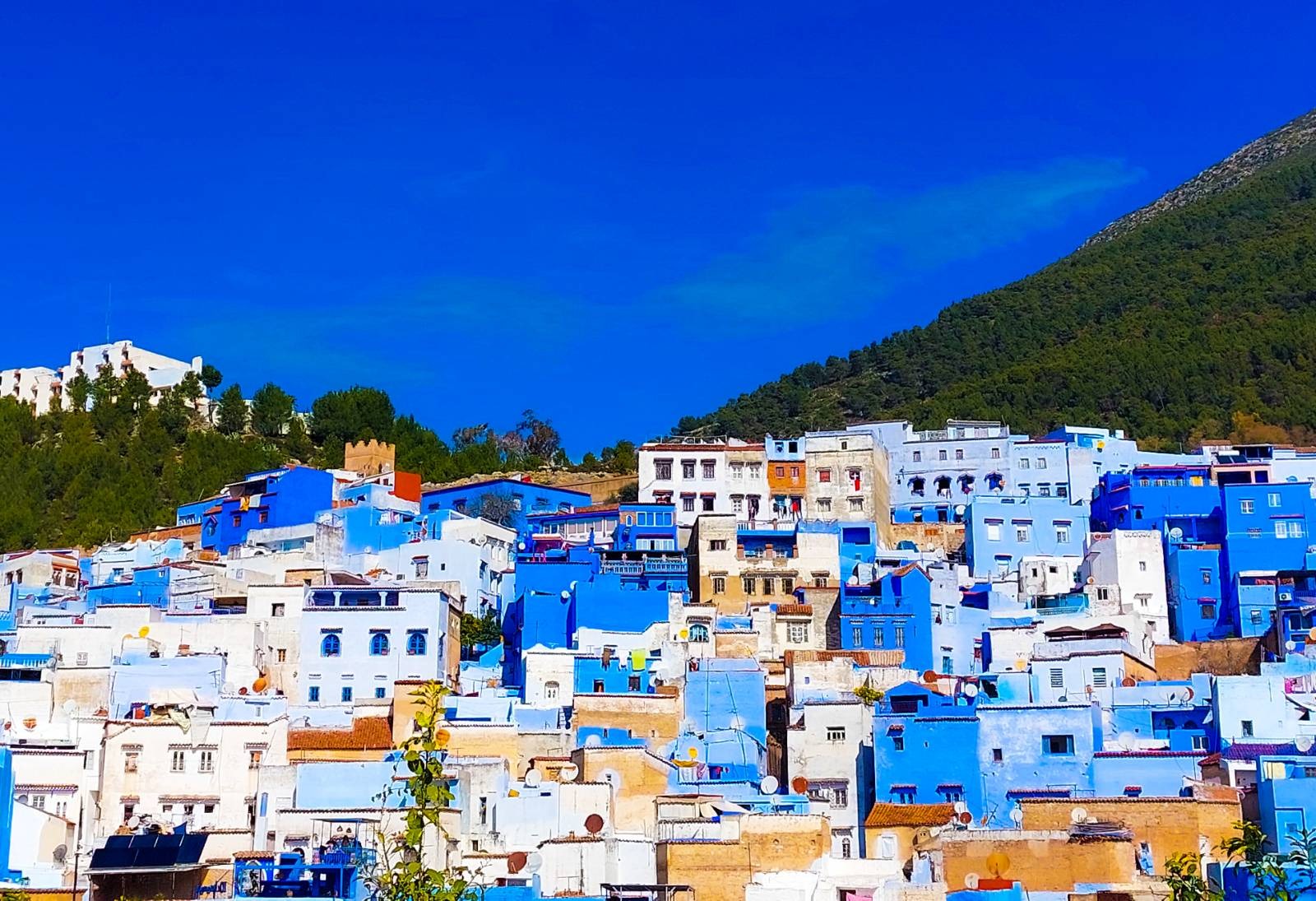
The definitive FIFA World Cup 2030 Morocco guide for fans. Six host cities, 115,000-seat Hassan II Stadium, visa-free entry for most African passports, ferry from Spain, flights from Lagos and Accra, where to stay, what to eat.
Morocco co-hosts FIFA World Cup 2030 across six cities — Casablanca, Rabat, Marrakech, Tangier, Fez, and Agadir. It is the first time an African nation co-hosts a men's World Cup, and the first time the tournament visits Africa since France 1998.
For football fans across Africa and the African diaspora, this is the World Cup that feels personal.
Here is everything you need to plan your trip.
Background: why Morocco matters
Morocco's 2030 hosting is the culmination of decades of effort. The country bid for the 1994, 1998, 2006, and 2010 World Cups — all unsuccessful. In 2022, Morocco's Atlas Lions became the first African and first Arab nation to reach a World Cup semi-final. Two years later, FIFA awarded them co-hosting rights for 2030.
The tournament runs 19 June – 21 July 2030. Morocco stages group stage and knockout matches. The Grand Stade Hassan II in Casablanca — under construction and projected at 115,000 seats — is expected to host the World Cup final.
The six host cities
Casablanca — the tournament hub
Morocco's largest city and commercial capital. Home of the Grand Stade Hassan II, which at 115,000 capacity will be the largest football stadium ever built, designed by Populous (architects of Wembley and Tottenham Hotspur Stadium) with a retractable roof, cooling technology and a design inspired by Moroccan geometric patterns.
Casablanca is also Morocco's main international airport hub. Mohammed V International Airport (CMN) serves direct flights from Lagos (~5 hours), Accra (~5 hours), Nairobi (~6 hours), Johannesburg (~8 hours), London Heathrow (~3.5 hours), New York (~8.5 hours), Paris (3 hours).
Expected to host: multiple group stage matches, knockout rounds, opening ceremony, and potentially the final.
Rabat — the capital
Morocco's political capital and a UNESCO World Heritage city. The Moulay Abdallah Stadium (65,000 seats, renovated) is the regular home of the Atlas Lions and is well-connected by Rabat's tram network. The medina, the Kasbah of the Udayas and the Hassan Tower make Rabat one of Morocco's most rewarding cities to spend several days in.
Expected to host: group stage and knockout matches.
Marrakech — the iconic city
Morocco's most internationally known city. The Grand Stade de Marrakech (expanded to 45,000) sits against the backdrop of the Atlas Mountains. Marrakech offers the full Morocco experience: Djemaa el-Fna, the souks, riads, hammams, day trips to the Atlas and Sahara. The busiest of the Moroccan host cities for tourists, but that infrastructure means excellent hotel choice across all price points.
Expected to host: group stage matches.
Tangier — the gateway between continents
The most logistically unique venue of the entire tournament. Tangier sits at the northern tip of Morocco, 14km from Spain across the Strait of Gibraltar.
The Ibn Batouta Stadium (65,000 seats — already one of Africa's most modern venues) can be reached by a 35-minute fast ferry from Tarifa, Spain. This means fans can attend a match in Spain and a match in Morocco on back-to-back days — crossing between continents by sea. The Al Boraq high-speed train connects Tangier to Casablanca in 2 hours 10 minutes and to Rabat in 1 hour 15 minutes.
Expected to host: group stage matches.
Fez — the cultural capital
Morocco's spiritual and intellectual heart. The Fès el-Bali medina is the largest car-free urban area in the world and a UNESCO World Heritage Site. The University of Al-Qarawiyyin, founded in 859 AD, is the oldest continuously operating university in the world. A new stadium (45,000+) is being built for the tournament.
Fez is unlike any other World Cup host city in history. The contrast between a medieval medina where donkeys still carry goods through narrow lanes and a modern FIFA stadium on the outskirts of the city is extraordinary. Direct flights connect Fez from Paris, Brussels and Amsterdam; most other fans connect through Casablanca (55 minutes by train or 3.5 hours by main ONCF rail).
Expected to host: group stage matches.
Agadir — the beach city
Morocco's premier coastal resort, 9km of Atlantic beach and over 300 days of sunshine annually. The Stade Adrar (expanded to 70,000) is a modern arena in one of the most relaxed host cities in the tournament. For fans who want football plus proper time on the beach, Agadir is the base.
Expected to host: group stage matches.
Visa requirements
This is Morocco's single biggest advantage for fans from Africa.
Most African passport holders can visit Morocco without a prior visa. Nigerian, Ghanaian, Kenyan, South African, Ugandan, Tanzanian, Senegalese, Ivorian, Ethiopian passport holders all typically enter Morocco visa-free or can obtain a visa on arrival.
UK and EU passport holders are also visa-free.
US passport holders enter visa-free.
This means a Nigerian fan can book a flight from Lagos, land in Casablanca, and attend a World Cup match — with no visa application, no embassy appointment, no bank statements required. Contrast this with Spain and Portugal, which require a Schengen visa for Nigerian, Ghanaian and most African passport holders.
For fans planning to combine Morocco with Spain or Portugal, you will need a Schengen visa for the European leg. But you can do the Moroccan leg entirely without paperwork.
Getting to Morocco
By air
From West Africa:
- Lagos (LOS) → Casablanca (CMN): ~5 hours. Royal Air Maroc, Ethiopian Airlines, Air Peace
- Accra (ACC) → Casablanca (CMN): ~5 hours. Royal Air Maroc, Ethiopian Airlines
- Abidjan (ABJ) → Casablanca (CMN): ~4 hours. Royal Air Maroc, Air Côte d'Ivoire
From East Africa:
- Nairobi (NBO) → Casablanca (CMN): ~6 hours. Ethiopian Airlines, Royal Air Maroc
- Dar es Salaam → Casablanca: ~7 hours connecting
From UK:
- London (LHR/LGW/STN) → Casablanca (CMN): ~3.5 hours. British Airways, Royal Air Maroc, EasyJet, Ryanair
- London → Marrakech (RAK): ~3.5 hours. EasyJet, Ryanair, TUI
From US:
- New York (JFK) → Casablanca (CMN): ~8.5 hours. Royal Air Maroc direct, Delta/Air France via Paris
By ferry from Spain
One of the most exciting travel options of any World Cup:
- Tarifa (Spain) → Tangier Ville: 35 minutes by fast ferry. Operators: FRS, Balearia. Multiple daily departures.
- Algeciras (Spain) → Tangier Med: ~90 minutes by conventional ferry.
This gives fans a genuinely unique opportunity: a match in Spain one day, cross the Strait of Gibraltar by boat, a match in Morocco the next. Advance booking essential — ferries fill fast and tournament period will have high demand.
By rail within Morocco
The Al Boraq high-speed train (Africa's only TGV service) connects:
- Tangier → Casablanca: 2 hours 10 minutes
- Tangier → Rabat: 1 hour 15 minutes
The conventional ONCF rail network connects all host cities:
- Casablanca → Marrakech: ~3 hours
- Casablanca → Fez: ~3.5 hours
- Casablanca → Rabat: 1 hour
First-class rail travel across Morocco is comfortable and affordable — typically 200–400 MAD ($20–40) per journey. World Cup fan passes and increased frequencies are expected during the tournament.
Where to stay
Casablanca
Best areas: Gauthier (upscale, safe), Maarif (commercial, lively), Casa-Voyageurs area (best transport links to other cities).
Price range: $40–70/night budget; $80–150 mid-range; $180–400+ luxury. Significantly cheaper than any European host city.
Book 12 months before your match dates. Corporate operators are already blocking hotel inventory.
Marrakech
Riads in the Medina are the defining Marrakech experience — hand-crafted interiors, courtyard gardens, rooftop terraces. Expect to pay $70–250/night and to accept some navigational confusion finding them in the souks.
The Gueliz district (Nouvelle Ville) is better for first-timers: international hotels, easy taxi access, walking distance to some medina areas. $60–180/night.
Tangier
The Ibn Battuta area and the Ville Nouvelle have good international hotels. The Medina also has riad options. $40–120/night.
Fez
Medina riads in Fès el-Bali are extraordinary but genuinely labyrinthine to navigate — allow extra time. Ville Nouvelle has standard international hotels from $50–120/night.
Agadir
Standard beach resort hotel infrastructure. International chains well-represented. $50–200/night. Lower prices than Casablanca or Marrakech for comparable quality.
Rabat
The Agdal district is close to the stadium and well-served by the tram. Good mid-range hotels. $60–150/night.
Getting around Morocco during the tournament
Between host cities, use the rail network. Casablanca is the hub — most fans will be based there or in Marrakech and travel out for specific matches.
Within cities, petit taxis (small metered taxis, usually red) are cheap and abundant. Agree on using the meter before setting off. Apps like Careem and inDriver also operate in major Moroccan cities.
For longer inter-city trips or group travel, grand taxis (shared long-distance taxis) cover routes not well served by rail.
Food and culture
Morocco's cuisine is one of the world's great culinary traditions — and a World Cup trip is as much about the food as the football.
Must eat:
- Tagine: slow-cooked meat or vegetable stew in a conical clay pot. Chicken and preserved lemon, lamb and prunes, vegetable — each region has its variation.
- Couscous: the national dish, traditionally served on Fridays. Slow-steamed semolina with seven vegetables and braised meat.
- Bastilla: Fez's extraordinary dish — pigeon or chicken with almonds, egg and spices wrapped in warqa pastry and dusted with icing sugar. Sounds unexpected, tastes extraordinary.
- Harira: spiced tomato and lentil soup, served with dates. Moroccan comfort food.
- Makouda: fried potato fritters from street carts, common across all host cities.
- Mint tea: the ritual of Moroccan hospitality. Never refuse it.
Djemaa el-Fna, Marrakech: The main square comes alive at dusk with dozens of food stalls cooking everything from snails to sheep heads to fresh-squeezed orange juice. The social heart of Marrakech and a UNESCO Intangible Cultural Heritage.
Safety and practical tips
Morocco is a safe country for international visitors and regularly hosts major international events. Standard travel precautions apply:
- Negotiate taxi fares before departure or insist on the meter
- In the Marrakech and Fez medinas, unofficial "guides" may approach you — they are not required and are usually paid commission by shops they take you to
- Carry cash in Moroccan Dirhams (MAD) for smaller purchases — cards are accepted in hotels and larger restaurants
- Halal food is universal; alcohol is available in licensed restaurants and hotel bars but not universally
- June–July is hot across Morocco — inland cities like Fez and Marrakech can reach 38–42°C. Casablanca and Tangier are cooler due to Atlantic influence. Agadir has the best coastal climate.
- Dress modestly when visiting mosques, medinas and rural areas — outside tourist areas, conservative dress is respectful
Book your FIFA 2030 Morocco package
Cantravu builds FIFA World Cup 2030 packages with Morocco as the primary destination — flights from Lagos, London, Accra, Nairobi and other departure cities, confirmed hotel, match tickets, and all transfers.
Tell us your departure city and preferred match dates and we'll build the itinerary.
Ready to book AFCON 2027?
Flights, hotel, match tickets, and transfers — all in one package.